Trustworthy Certified Rug Cleaning Bronx New York: 2026 Guide for Park Slope Residents
Most people don’t realize they’ve hired the wrong rug cleaner until something goes wrong a wool rug comes back stiff, a silk fringe is shredded, or a hand-knotted piece has shrunk two inches on each side. If you’re a Park Slope resident researching certified rug cleaning Bronx New York, you’re already asking a smarter question than most. The Bronx has a concentrated cluster of rug cleaning operations, and the gap between the careful, credentialed ones and the opportunistic ones is wide. This guide helps you close that gap before you hand over anything valuable.
Last fall, a client reached out to us after a frustrating experience. She’d brought a vintage Tabriz rug one her family had carried from a pre-war apartment on the Grand Concourse to a cleaner she found through a flyer in her Park Slope co-op lobby. The price was low. The turnaround was fast. And the rug came back with a color bleed across the central medallion that no amount of re-cleaning could reverse. We’ve seen versions of this story from clients in Williamsburg, Astoria, and Harlem. It’s preventable, every time, with the right questions asked upfront.
The Credentials That Actually Matter
Certification in this industry isn’t decorative. The Institute of Inspection, Cleaning and Restoration Certification (IICRC) maintains the most widely recognized standards for textile cleaning. Look for cleaners who hold current IICRC certification specifically the S300 Textile Cleaning Standard which governs fiber identification, dye stability testing, and appropriate cleaning methods. The IICRC recommends professional rug cleaning every 12 to 18 months for most households, and more frequently in high-traffic homes or those with pets.
Beyond the IICRC, ask whether the cleaner has training specific to hand-knotted rugs, Oriental rugs, or natural fiber rugs (wool, silk, jute). These are distinct skills. A technician certified for wall-to-wall carpet extraction is not automatically qualified to clean a 19th-century Heriz. Some reputable cleaners also carry training from the Rug and Textile Appreciation Society or have completed programs through recognized rug trade associations. Don’t be shy about asking for documentation.
Questions to Ask Before You Commit
Before you schedule a pickup or drop-off, get real answers to these questions. A legitimate cleaner will have no hesitation responding. One who deflects or gets vague is telling you something.
- Do you perform a fiber and dye test before cleaning, and can I see the results?
- Where is the actual cleaning done — on-site, at a facility, or subcontracted out?
- What cleaning method do you use for hand-knotted or wool rugs, and why?
- How do you control drying time and humidity, especially in summer months?
- What is your policy if a rug is damaged in your care?
- Can you provide references from clients whose rugs are similar in type or value to mine?
- Are your technicians on staff, or do you use day-labor crews?
That last question matters more than people expect. New York City’s high turnover in service labor means some operations use untrained day crews for volume work. A facility with salaried, trained staff handles your rug differently — and takes more accountability for outcomes.
Certified Rug Cleaning Bronx New York: Red Flags in Plain Sight
Some warning signs are obvious only in hindsight. We want you to catch them in advance.
Be cautious of any cleaner who quotes a price without seeing the rug. Legitimate pricing depends on fiber type, construction, size, soiling level, and condition variables that can’t be assessed from a phone call. According to the Rug and Textile Appreciation Society, improper DIY rug cleaning and rushed professional work are among the leading causes of irreversible damage to wool, silk, and hand-knotted rugs. Flat-rate, over-the-phone quotes often signal a one-size-fits-all process applied to rugs that need individualized care.
Watch for cleaners who can’t tell you where your rug goes. Some operations in the outer boroughs and in parts of upper Manhattan are essentially brokers they take the rug, ship it to a third-party facility, and mark up the price. That’s not inherently wrong, but you deserve to know, and you deserve to know who is actually handling your property.
Also be wary of pressure tactics around pickup windows, “today only” discounts, and vague language about cleaning methods. A good cleaner is busy but not desperate. They’ll give you time to decide.
How to Compare Quotes Without Getting Burned
Rug cleaning quotes in New York City in 2026 vary widely anywhere from $3 to $8 per square foot for standard area rugs, and significantly higher for silk, antique, or heavily soiled pieces. When you’re comparing estimates, make sure each quote covers the same scope: pre-inspection, washing, controlled drying, minor fringe grooming, and return delivery. An estimate that omits drying or delivery will look cheaper until it isn’t.
Ask each company to break down what the price includes. This isn’t aggressive it’s how smart consumers protect themselves. A cleaner who works in a proper facility with climate-controlled drying rooms (a real consideration given New York’s brutal summer humidity) is offering something meaningfully different from a truck-mount operation that returns a damp rug to your Upper East Side or Park Slope apartment and calls it done.
According to the EPA, indoor air can be two to five times more polluted than outdoor air, and rugs trap significant amounts of dust, allergens, and particulate matter a particular concern in dense urban environments like New York City. That’s why the cleaning method and the drying environment both matter for your household’s air quality, not just the rug’s appearance.
What Proper Care Actually Looks Like
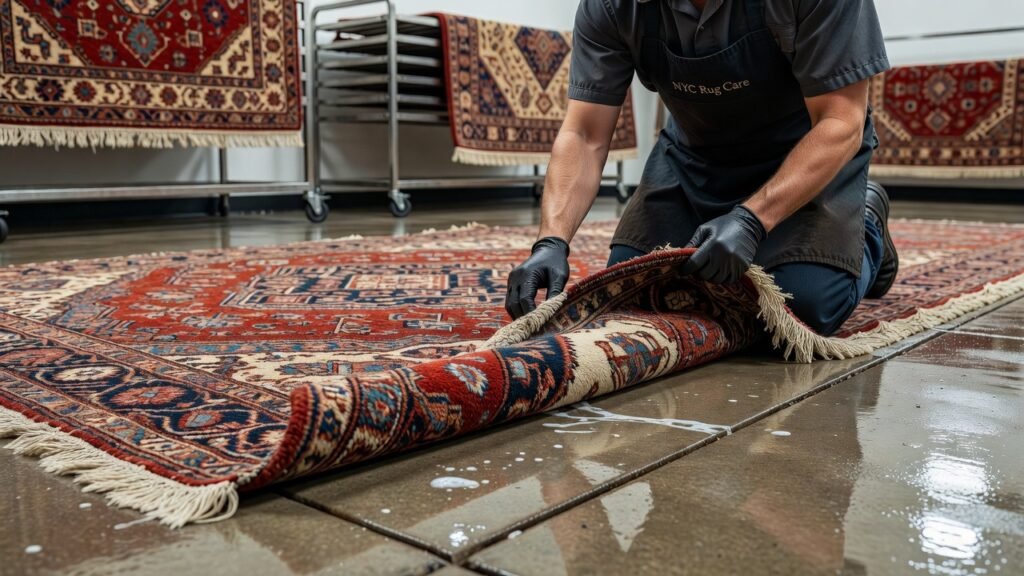
A legitimate certified cleaner will walk your rug through a defined process: inspection and tagging, fiber and dye testing, dusting, washing with appropriate pH-balanced solutions, controlled drying in a facility (not air-drying rolled up in a van), and final grooming before return. That process takes time usually five to ten business days for a quality result. Anything significantly faster should prompt a question about what step was skipped.
We work with clients across the city, including many Park Slope residents who don’t own a car and need reliable pickup and delivery. If logistics are part of your decision, factor in whether a company offers that service clearly and at a stated cost, not as a mystery fee disclosed at drop-off.
If you want a straight conversation about what your rug needs and what it will cost, we’re easy to reach. Visit upperrugcleaning.com or call us directly. We’ll tell you what we see not what’s easiest to say.
Frequently Asked Questions
How do I know if a rug cleaner is genuinely IICRC certified, or just claiming to be?
The IICRC maintains a public directory at iicrc.org where you can search by company name or zip code to verify active certification. Any cleaner worth hiring will welcome this check they paid for the credential and the training behind it. If a company resists or can’t point you to their listing, treat that as meaningful information.
My rug isn’t especially expensive — do I still need a certified cleaner, or is a standard carpet cleaning service fine?
The risk isn’t only financial loss on a high-value piece. Even a moderately priced wool or flatweave rug can be permanently damaged by the wrong cleaning chemistry or excessive moisture. Color bleed, shrinkage, and fiber distortion happen to mid-range rugs just as easily as antique ones. A certified cleaner with proper dye-testing protocol costs relatively little more and eliminates that risk entirely.
How often should rugs in a New York City apartment realistically be cleaned?
The IICRC recommends professional cleaning every 12 to 18 months under normal household conditions. In a New York apartment where rugs work harder due to foot traffic, limited ventilation, humid summers, and in many cases pets annual cleaning is a reasonable baseline. Households with dogs, young children, or allergy sufferers often benefit from cleaning every 8 to 12 months. A credentialed cleaner can assess your specific rug and give you an honest recommendation after inspection.
Related from Upper Rug Cleaning: How Upper Rug Cleaning Earns and Verifies Customer Reviews in Manhatta · Professional Rug Cleaning Services in Manhattan, NY