
Protect What You Own: Antique Rug Cleaning Service Manhattan — 2026 Guide for Queens Residents
Stooping culture in New York City is real, and so is the risk that comes with it. A Brooklyn woman made headlines last year after being arrested and held for seven hours in a Bushwick precinct over a disputed set of rugs a story that reminded a lot of us how fiercely New Yorkers feel about their floor coverings, and how quickly things can go sideways when the provenance or condition of a rug becomes a question. If you have an antique rug in your Queens apartment or home, you already know it carries weight sometimes monetary, often sentimental. Finding the right antique rug cleaning service Manhattan before damage gets worse is not a luxury decision. It is a preservation decision.
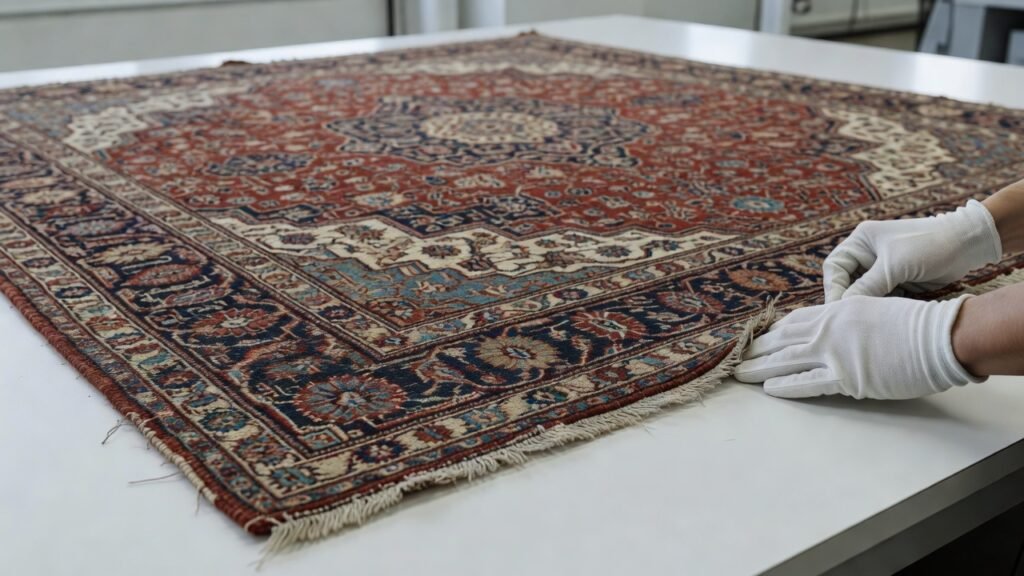
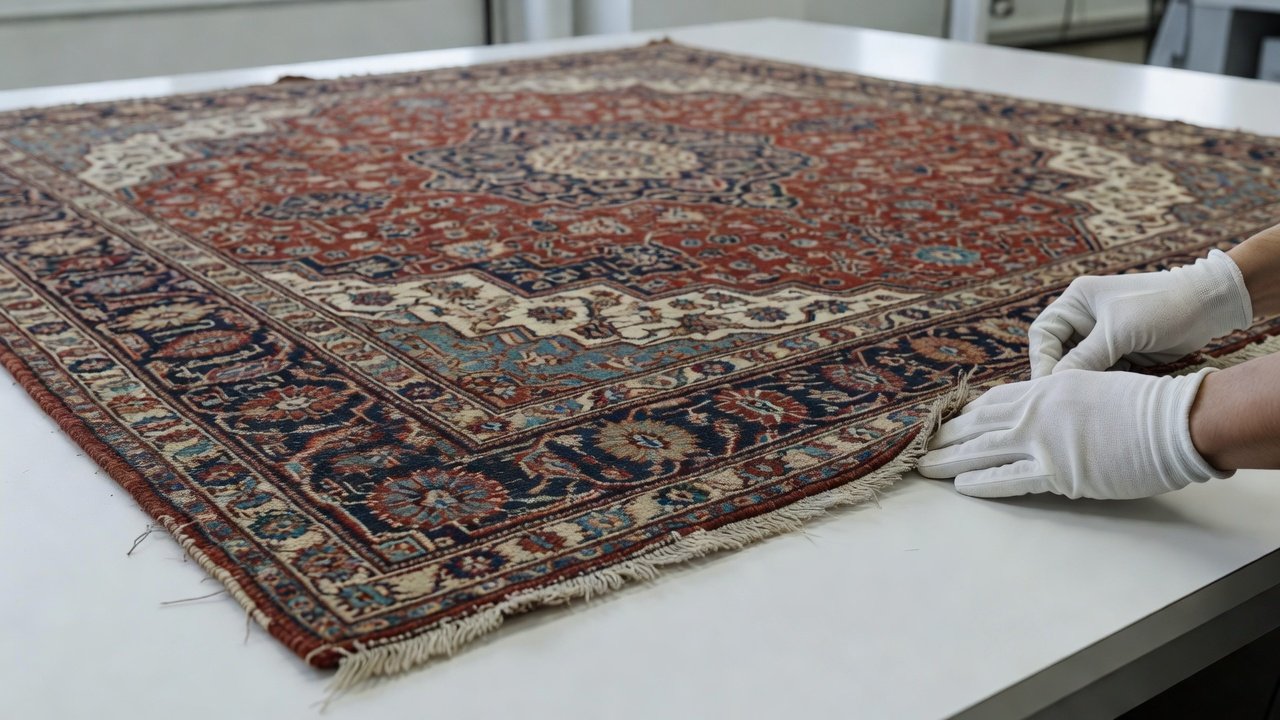
Last fall, a client in Jackson Heights brought us a late-19th-century Tabriz rug, roughly 9 by 12 feet, that had been in her family since her grandmother carried it over from Tehran. She had been putting off professional cleaning because the rug still looked presentable from a distance. Up close, the foundation fibers were dry rotting along the fringe edge, and the pile was so packed with particulate matter that the original burgundy field had dulled to a flat, muted rose. The rug needed immediate intervention not a rinse, not a vacuum, not a spray-and-wipe. It needed the kind of full-immersion hand wash and dry-flat process we run at our Manhattan facility. We got her there, and the rug came back looking like itself again. But another six months of waiting and we would have been talking about structural loss, not surface grime.
Here is what she and a lot of Queens homeowners missed along the way. These are the specific, observable signs that your antique rug needs professional attention now, not at some later date you keep moving forward.
Warning Signs Your Antique Rug Needs a Professional Clean — Not Next Month, Now
The pile flattens and does not spring back when you press it
Run your palm firmly across the rug surface, press down, and lift. In a healthy wool pile, you will feel resistance and see the fibers recover. If the pile stays depressed, the fiber shafts are clogged with compacted soil, oils, and fine particulate exactly the kind of embedded grime that accumulates faster in a Queens apartment with street-level windows or a ground-floor unit near the elevated train lines on Roosevelt Avenue. This is a call a pro now situation. Flat, non-recovering pile means the cleaning cycle is already overdue.
You notice a faint but persistent sour or musty smell, especially after humidity
New York summers are punishing in ways that residents of Flushing or Woodside know intimately old buildings with limited ventilation, humidity that lingers for days. A musty smell rising from an antique rug after a hot, wet week is not cosmetic. It signals biological activity: mold spores or mildew establishing inside the pile or the foundation. According to the EPA, indoor air can be two to five times more polluted than outdoor air, and rugs trap significant amounts of dust, allergens, and particulate matter a particular concern in dense urban environments like New York City. Do not attempt to dry this yourself with a fan. Call a pro now.
The fringe is discoloring at the ends, browning, or separating from the foundation
Fringe on a hand-knotted antique is not decorative trim it is the exposed warp structure of the rug itself. When fringe browns or breaks off near the foundation, it usually means dry rot is moving up from the base. This is often invisible from standing height, which is why so many clients miss it until significant loss has occurred. Get on your hands and knees. Look at the fringe where it meets the rug body. If it crumbles when you pinch it gently, you are past the observation stage. Call a pro now.
You see white, chalky residue on the surface after a spot cleaning attempt
This one appears constantly in our facility intake logs. A client a homeowner in Forest Hills, most recently tried to address a wine spill with a store-bought enzyme cleaner. The residue left behind was worse than the original stain, and it had begun to break down the natural lanolin in the wool pile. Improper DIY rug cleaning, including over-wetting, harsh detergents, or machine washing, is one of the leading causes of irreversible damage to wool, silk, and hand-knotted rugs, according to the Rug and Textile Appreciation Society. Chalky residue from a prior cleaning attempt is a signal that chemical damage may already be underway. Call a pro now.
Colors in adjacent dye lots are bleeding into each other
Hold your phone flashlight close to a border where two colors meet say, the navy field against the ivory medallion. If the edge looks blurry, if the ivory has a bluish tint, or if you can see feathering into the adjacent field, the dyes are migrating. This can happen from a single moisture event a window left open during a rainstorm, a child’s spilled juice, a steam mop used too close. Dye bleed worsens with time and heat. Call a pro now and tell us exactly what caused the moisture exposure so we can treat accordingly.
Pet urine odor returns every time the room warms up
New York City has over 1.1 million registered dogs alone as of 2024, according to NYC DOHMH Animal Care data, making pet-related rug staining the top service request we handle. Urine that has been treated with an over-the-counter enzyme spray at the surface level is not gone the uric acid crystals have bonded into the foundation fibers and re-activate with heat and humidity. If the smell comes back every summer, the rug has not been properly cleaned; it has been masked. This requires full extraction, not surface treatment. Call a pro now.
The rug has visible warping, buckling, or a section that no longer lies flat
A rug that cups at the corners or buckles across the center has either been wet and dried unevenly, or its foundation has lost tension over time. In a pre-war apartment on a radiator system common throughout Astoria and Elmhurst dry heat in winter can accelerate this deterioration. Minor buckling can sometimes be corrected by a professional wash and controlled flat drying. Severe warping may require reblocking. Either way, this is a call a pro now situation before the distortion becomes permanent.
You cannot remember the last time it was professionally cleaned
The IICRC recommends professional rug cleaning every 12 to 18 months for most households, and more frequently in high-traffic or pet-owning homes. If you are drawing a blank, assume the interval has passed. This one is keep an eye on it only if the rug is in a low-traffic guest room and shows none of the other signs above. In any other scenario, schedule the cleaning.
What the Antique Rug Cleaning Service Manhattan Process Actually Looks Like
We want to set honest expectations because a lot of clients come to us having been burned by corner-cutting operations that returned a rug in worse shape than it arrived. When you bring an antique piece to us from Queens whether you drive over the bridge or take advantage of our pickup service the process begins with a full condition assessment. We document fiber type, dye stability, foundation integrity, and any existing damage before water ever touches the rug.
Cleaning itself involves controlled hand washing in a facility designed for large-format textiles, not a spray-and-extract machine pulled from a van. After washing, rugs are dried flat, never hung, never machine tumbled. Hanging a wet antique rug by its ends stresses the foundation and can cause permanent distortion something you will never see disclosed on a competitor’s website, but something we see the results of regularly at intake.
If the rug has fringe damage, dye bleed, or pile loss, those concerns are discussed with you directly before any additional restoration work begins. We do not assume; we consult. The entire process, depending on the rug’s condition and size, typically runs seven to fourteen business days.
If your rug is showing any of the signs above, do not wait for the condition to normalize on its own — it will not. Reach out to us at upperrugcleaning.com to schedule a pickup from Queens or arrange a drop-off consultation at our Manhattan facility. The earlier we see it, the more options you have.
Frequently Asked Questions
Can I bring my antique rug from Queens to your Manhattan facility myself?
Yes, and many of our Queens clients do exactly that they roll the rug, wrap it, and bring it in directly. We also offer scheduled pickup for clients in neighborhoods like Astoria, Jackson Heights, Flushing, and Forest Hills who don’t have access to a vehicle large enough. Just contact us through upperrugcleaning.com to arrange a time.
How do I know if my antique rug can be restored or if the damage is too far gone?
We assess every rug individually before we recommend a course of action. Dry rot, severe dye bleed, and significant pile loss all have thresholds beyond which restoration becomes impractical but most rugs that clients assume are “too far gone” still have real options. The only way to know is a professional evaluation, which we provide as part of our intake process at no obligation.
Is there a difference between antique rug cleaning and standard area rug cleaning?
There is a meaningful difference, yes. Antique rugs generally defined as pieces over 80 to 100 years old use natural dyes and hand-spun fibers that respond differently to water, pH levels, and agitation than modern rugs do. The cleaning process has to account for those variables specifically. A standard area rug cleaning protocol applied to a fragile antique can cause irreversible dye migration or fiber damage. That is why we assess every piece before determining the correct wash chemistry and technique.