Honest Warning Signs You Need Pet Stain Rug Cleaning in Williamsburg Brooklyn: 2026 Guide for Brooklyn Residents
Spring in Williamsburg hits differently when you’ve got a dog and a vintage Moroccan rug in your living room. Last March, a client on Bedford Avenue brought us a wool flatweave that her rescue greyhound had repeatedly soiled over the winter. The smell had been masked for months by candles and open windows, but the moment warmer temperatures arrived, the apartment was nearly unbearable. That rug needed professional pet stain rug cleaning in Williamsburg Brooklyn not a bottle of spray from the hardware store on Metropolitan Avenue. We see situations like this constantly, and the clients who wait longest always end up with the worst outcomes.
The real problem isn’t that pet accidents happen. It’s that most Brooklyn apartment dwellers don’t know what to watch for, or they notice the early signs and assume they can manage it themselves. Below is a straightforward checklist of warning signs we’ve documented in our facility things you can actually see, smell, or feel along with honest guidance on when to pick up the phone and when you might have a little more time.
Warning Signs Your Rug Needs Pet Stain Rug Cleaning in Williamsburg Brooklyn Right Now
1. The smell returns after you’ve already cleaned it
You blotted, you sprayed an enzyme cleaner, you let it dry. Two weeks later the odor is back, especially on a humid Tuesday. This is the single most reliable sign that urine has penetrated past the pile and into the foundation fibers or the backing. In a pre-war Williamsburg apartment with limited airflow, residual ammonia compounds trapped in the rug structure will off-gas indefinitely. Surface cleaning doesn’t reach them.
2. Yellow or brownish halos appearing on the surface
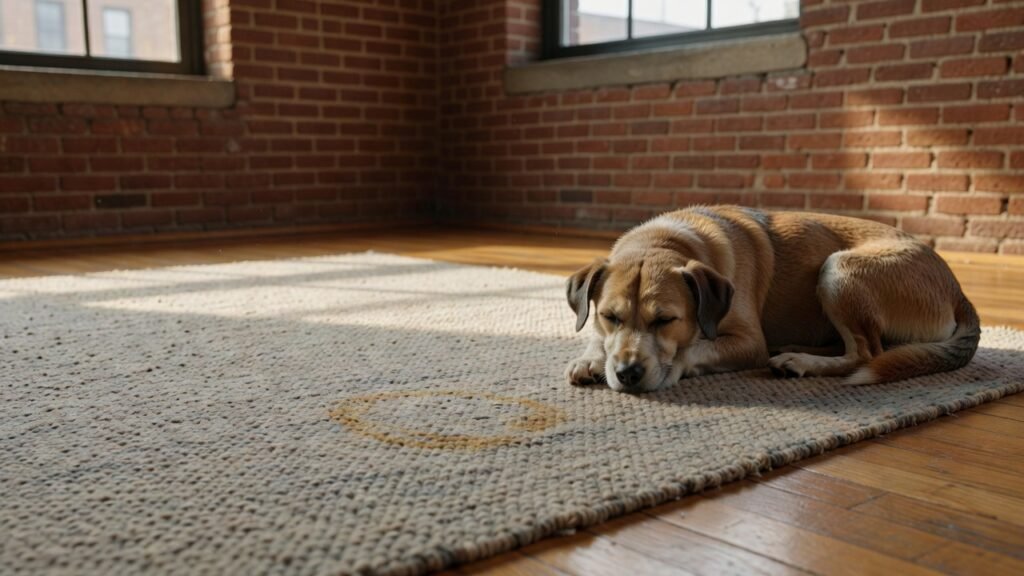
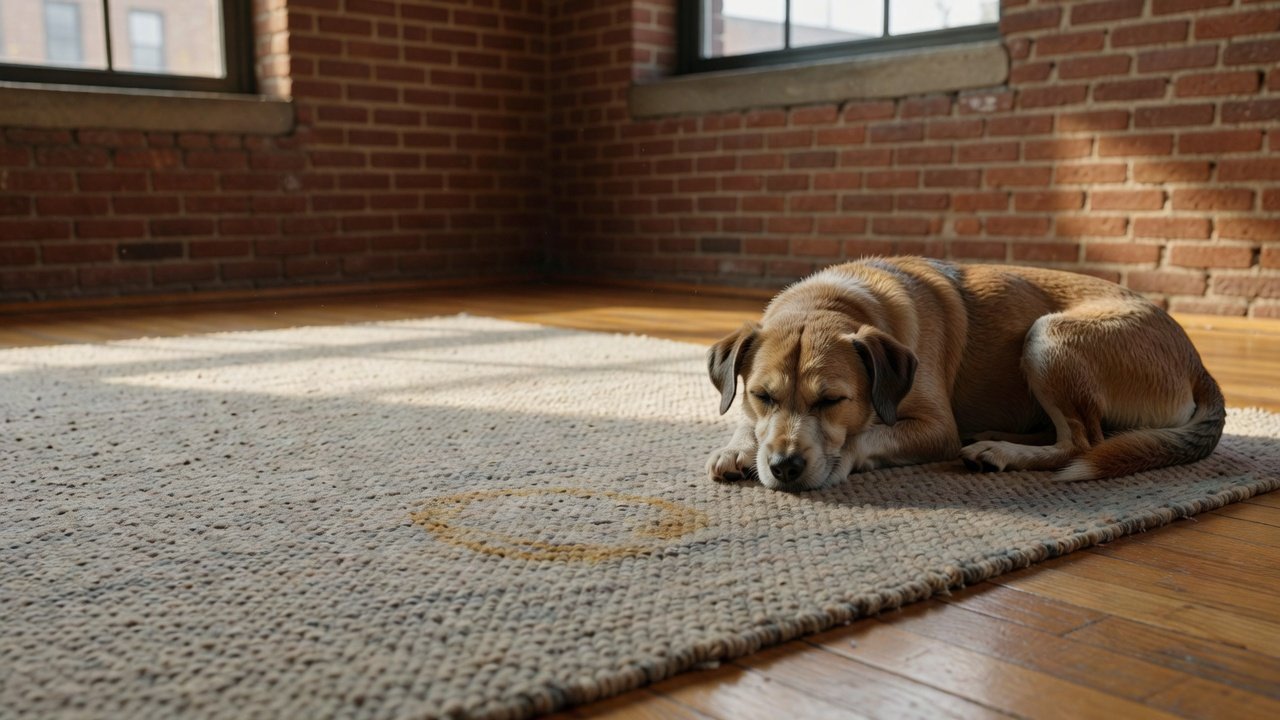
These rings form when urine wicks outward as it dries and deposits uric acid crystals at the edges of the original stain. If you can see a defined halo even faint the contamination has already spread beyond what most consumers realize. On a hand-knotted or wool rug, those crystals bond to the fiber and become significantly harder to remove with each passing week.
3. Your pet keeps returning to the same spot
Dogs and cats can detect residual urine odor at concentrations far below what humans can smell. If your animal gravitates to one particular corner of the rug despite no visible stain, the scent marker is still there, embedded in the fibers. This behavioral pattern is one of the clearest signals we hear from clients across Brooklyn, from Greenpoint down to Park Slope.
4. White powdery residue after the rug dries
That chalky crust is uric acid salt crystallizing on the surface. It’s a sign the rug has been soiled multiple times, possibly in the same spot, and the mineral content has built up enough to be visible. Attempting to scrub it out without professional flushing will break fibers and push the crystals deeper.
5. The rug backing feels stiff or crunchy in one area
Run your hand under the rug. A stiff, papery, or crunchy texture in a localized section almost always indicates dried urine that soaked through the pile and set in the foundation. This is especially common in machine-made rugs with latex backings, which absorb moisture and never fully release it without a proper submersion wash.
6. Color fading or bleaching in the stained area
Pet urine is acidic when fresh and becomes highly alkaline as bacteria break it down. That pH shift can pull dye from wool and natural fiber rugs over time, leaving a lighter or discolored patch. If you’re seeing color change in the affected zone, the fiber has already been chemically altered. Cleaning won’t reverse dye loss, but it will stop further damage.
7. A faint smell only detectable at floor level
Get down on one knee and put your nose near the surface. If you catch an ammonia or musty odor that isn’t obvious when standing, the contamination is mild but real. According to the American College of Allergy, Asthma & Immunology, rugs can harbor up to 100,000 dust mite allergens per gram of material and pet waste compounds that problem significantly. At this stage, you have a short window.
8. The rug was cleaned but still failed a sniff test after 48 hours
This is the post-DIY failure we see most often. A client in Crown Heights told us she had shampooed her rug twice with a popular rental machine before calling us. The machine re-wetted the urine deposits, spread the contamination, and when the rug dried, the smell was actually worse. According to the Rug and Textile Appreciation Society, improper DIY cleaning particularly over-wetting is one of the leading causes of irreversible fiber damage in wool and hand-knotted rugs.
The Mistakes That Make It Worse
We’ve seen the same handful of errors repeated across apartments from Astoria to the Upper East Side, and Williamsburg is no exception. The most damaging is using a steam cleaner on a urine stain the heat permanently sets the proteins in the waste, bonding them to the fiber. A close second is scrubbing instead of blotting, which pushes the liquid deeper and spreads the affected area outward.
Baking soda is widely recommended online and it does absorb surface odor temporarily, but it doesn’t neutralize uric acid crystals at the fiber level. Clients who use it feel like they’ve solved the problem and delay professional treatment for weeks longer than they should. NYC’s humid summers, which regularly push indoor humidity above 65 percent in apartments without central air, cause those crystals to reactivate and release odor all over again.
The IICRC recommends professional rug cleaning every 12 to 18 months for most households, and more frequently in homes with pets. A single pet accident, if treated improperly, can shorten a rug’s lifespan dramatically a serious concern when many Williamsburg residents own rugs valued between $800 and several thousand dollars.
What Professional Treatment Actually Involves
At our facility, pet stain treatment isn’t a step in the cleaning process it’s its own protocol. We inspect the rug under UV light first, which reveals the true spread of contamination (almost always larger than what’s visible to the naked eye). Then we treat the affected areas with targeted enzyme solutions before doing a full submersion wash, which flushes contaminants out from both directions top of pile and through the backing. This is the only method that reliably removes uric acid from the fiber structure rather than masking it.
If you’re in Williamsburg or anywhere in Brooklyn and you’re not sure whether your rug’s situation qualifies as urgent, we’re happy to take a look. Reach out to us at upperrugcleaning.com we offer pickup and delivery across Brooklyn, and we can often give you a clear assessment from photos before you commit to anything.
When to Act and When You Have Time
- Act today: Recurring odor after DIY cleaning, visible halos or crystal deposits, stiff backing, color change, pet returning to the same spot repeatedly.
- Schedule soon (within 1–2 weeks): Faint odor only at nose level, a single recent accident that was blotted promptly, mild discoloration without a defined ring.
- Monitor but don’t ignore: A rug that smells slightly musty overall but has no identifiable stain this often signals general soil buildup and warrants an annual cleaning even without a specific incident.
The threshold for “urgent” is lower than most people assume. Uric acid reacts with bacteria over time, and New York City apartments especially those in older Williamsburg buildings with limited ventilation create exactly the warm, humid conditions that accelerate that process. Contact us at upperrugcleaning.com or call to schedule a pickup. We’ll tell you honestly what the rug needs and what it will cost before any work begins.
Frequently Asked Questions
Can a rug be fully restored after repeated pet accidents, or is there a point of no return?
Honest answer: it depends on fiber type, how long the damage has been present, and how the stain was treated before coming to us. Wool and natural fiber rugs are resilient but not indestructible. We’ve successfully treated rugs with years of embedded pet odor, but if dye has been chemically stripped or structural fibers have rotted from prolonged moisture, some damage is permanent. The earlier you bring a rug in, the better the outcome this is true of every case we handle in Brooklyn and across the city.
Why does the smell come back stronger in summer even after I cleaned the rug myself?
Uric acid crystals left behind after surface cleaning reactivate in humidity. During a New York City summer, when indoor humidity in a Williamsburg apartment without central air can climb above 65 percent, those crystals absorb moisture from the air and off-gas ammonia all over again. Professional submersion washing physically flushes these crystals out of the fiber no surface-level treatment can replicate that.
How do you handle pickup if I don’t have a car and live in a walk-up building?
Most of our Brooklyn clients are in exactly that situation. We handle rug pickup and delivery throughout Williamsburg, Greenpoint, Bushwick, Crown Heights, and the surrounding neighborhoods. You don’t need a car, and you don’t need to haul anything down a staircase yourself. Contact us through upperrugcleaning.com to schedule a time, and we’ll coordinate the rest.
Related from Upper Rug Cleaning: Honest Pet Stain Rug Cleaning in Williamsburg Brooklyn · Rug Cleaning City · Honest Look at Our Rug Cleaning Services for Residents of New York