Choosing Deep Rug Cleaning Astoria Queens: 2026 Guide for Flushing Residents
A lot of rug cleaning companies in Queens will take your money and return a rug that smells like chemicals and looks marginally better than when it left. Deep rug cleaning in Astoria Queens done right is a different thing entirely, and knowing what separates a thorough job from a surface wash can save you a significant amount of money and heartbreak. This guide is written for Flushing residents who are weighing their options and want honest, practical advice before they hand over an heirloom or an expensive area rug to a stranger.
Last winter, a family from Flushing’s downtown district brought us a large hand-knotted Tibetan rug. They had a young child, two cats, and the kind of pre-war building radiator heat that dries everything out and keeps dust perpetually airborne. A local cleaning outfit had run a machine over it six months prior wet, fast, done in a day and now the rug had a persistent musty odor, and the fringe was matted and discolored. We had to re-clean it, condition it, and spend extra time on odor neutralization. The family had paid twice by the end. That story is more common than it should be, especially across Queens neighborhoods where there are dozens of operators and very little standardization.
What Deep Rug Cleaning Actually Involves
The word “deep” is used loosely in this industry, so let’s be specific about what a genuine deep clean should include. It starts with a thorough dry soil removal either by dusting machine or hand-beating to pull out the particulate that lives at the base of the pile. This step alone can remove pounds of compacted debris from a large rug, debris that vacuuming never reaches. Skipping it and going straight to wet washing just turns dry dirt into embedded mud.
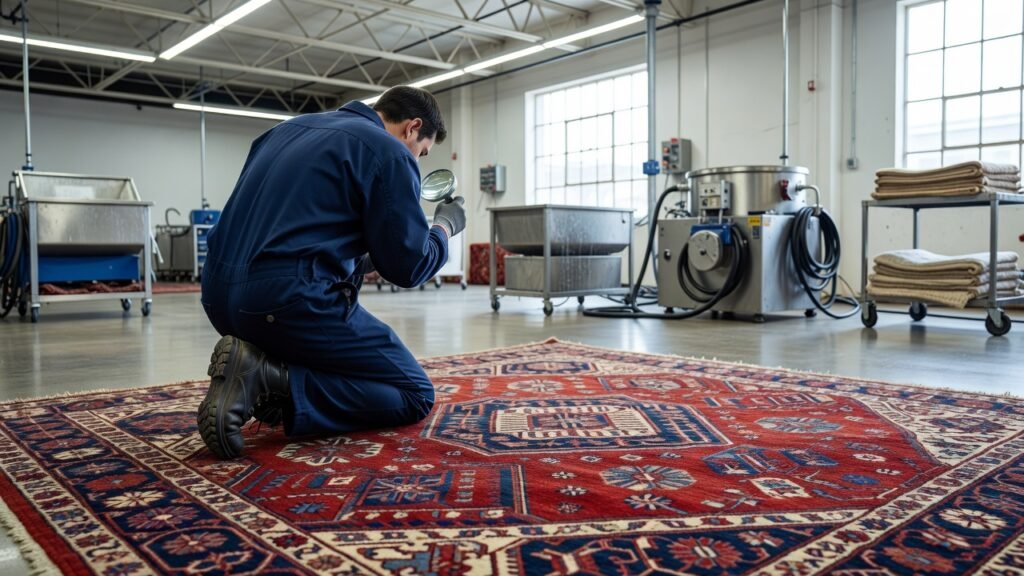
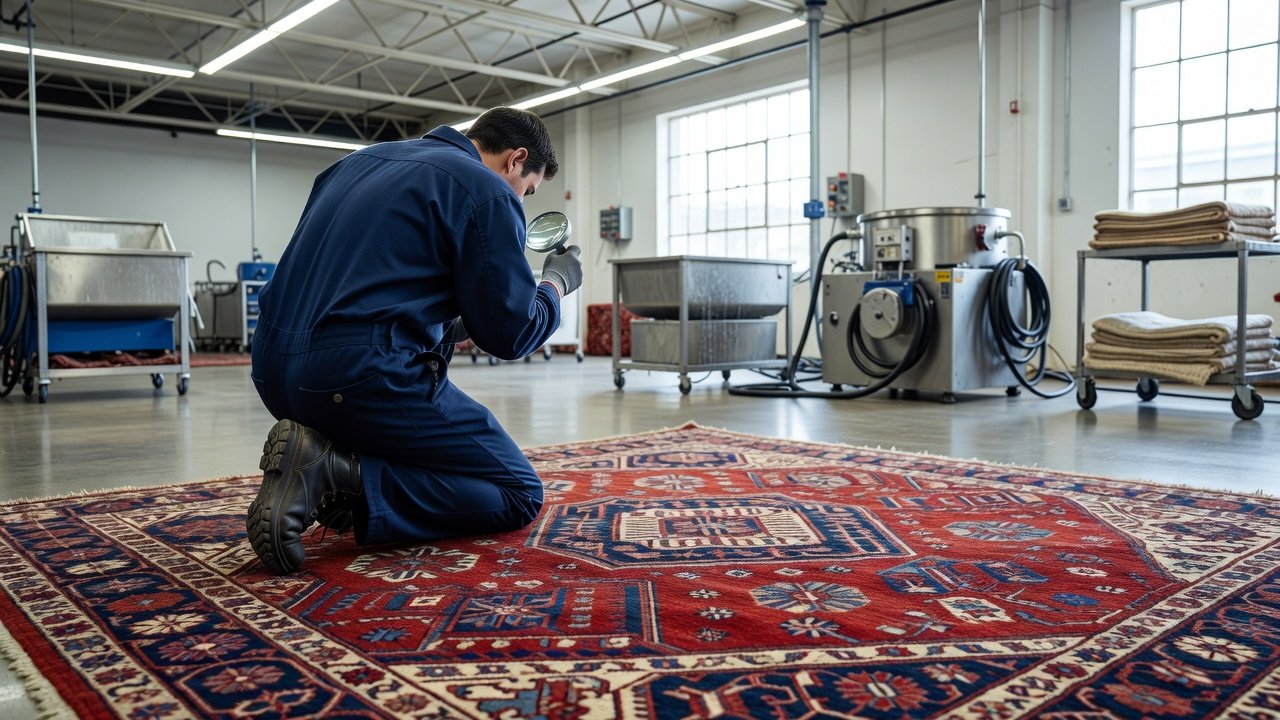
After dusting, the rug is inspected for colorfastness, fiber type, and any existing damage. A wool rug from a Flushing co-op and a synthetic machine-made rug from a Woodside apartment need different pH levels in the wash solution, different water temperatures, and different drying times. According to the Institute of Inspection, Cleaning and Restoration Certification (IICRC), professional rug cleaning every 12–18 months is the standard recommendation, but the method has to match the material. A company that uses one process for everything is cutting corners.
The wash itself whether full immersion or controlled surface washing should be followed by thorough rinsing to remove all detergent residue, then controlled drying in a climate-regulated space. Rugs dried too fast or in humid conditions develop mildew in the foundation fibers. This is a real concern in Queens summers, when ambient humidity regularly tops 70 percent. A reputable facility has drying rooms with active airflow, not just an open warehouse.
Credentials Worth Asking About Before You Commit
Not every good cleaner has a wall of certificates, but credentials do tell you something about whether a company has invested in training or is just running equipment and hoping for the best.
- IICRC Certification — The Institute of Inspection, Cleaning and Restoration Certification is the most recognized trade credential. Look for technicians certified under the S300 Textile Cleaning Standard specifically.
- RCA Membership — The Rug Cleaning Association provides ongoing education and holds members to defined quality standards.
- Oriental Rug Care Guild (ORCG) — Relevant if you own hand-knotted, antique, or silk rugs. This is a specialized body, and membership signals focused expertise.
- NYS General Business License — Basic but worth confirming. An unlicensed pickup-and-delivery operation has no accountability if something goes wrong.
- Insurance — Ask specifically about bailee coverage, which protects customer property while it is in the cleaner’s possession. General liability alone does not cover your rug if it is lost or damaged at their facility.
Questions to Ask Before You Hand Over the Rug
A few direct questions will tell you more than any marketing copy. A company that gets flustered or vague answering these is a company to avoid.
- Do you dust the rug before washing, and what equipment do you use for that step?
- Where is the rug actually cleaned — on-site at your facility, or subcontracted out?
- How do you determine the right wash solution for my specific fiber type?
- What is your drying setup, and how long does drying typically take?
- Do you carry bailee insurance that covers damage or loss while the rug is in your care?
- What happens if the rug shrinks or colors bleed — what is your resolution process?
- Can I see your facility, or do you have photos of your cleaning and drying setup?
That last one is telling. Professional operations are not shy about showing their work environment. A pickup truck and a subcontract arrangement which is common across parts of Queens is not the same as a dedicated wash facility with trained staff.
Red Flags That Should Make You Walk Away
A 2023 finding from the American College of Allergy, Asthma and Immunology noted that rugs can harbor up to 100,000 dust mite allergens per gram of material. That level of contamination requires real extraction, not a pass with a portable machine. If a company is quoting you a same-day, in-home deep clean for a large rug, that is not a deep clean that is a surface treatment with better marketing language.
Other warning signs we hear about regularly from clients across Astoria, Flushing, and Jackson Heights:
- A price quote given before the rug has been inspected or measured
- No mention of the dusting or dry soil removal step
- Drying time quoted at under 24 hours for a dense wool or hand-knotted rug
- No clear answer on where the rug will be physically cleaned
- Unusually low flat rates below $3–4 per square foot for hand-knotted or specialty rugs is a signal that something is being skipped
- No written receipt or intake form when they pick up the rug
How to Compare Quotes Without Getting Misled
Square footage is the honest unit of measure. A quote that comes in as a flat fee for the whole job without referencing size is impossible to compare to anything else. Get at least two quotes that break down price per square foot by rug type. Wool area rugs, synthetic flatweaves, and hand-knotted Persians should each land in different price ranges, and a company that quotes them all the same is not doing tailored work.
According to the EPA, indoor air can be two to five times more polluted than outdoor air, with rugs functioning as a primary reservoir for dust, allergens, and particulate a reality that hits hard in dense urban housing like the high-rise buildings along Main Street in Flushing or the older rental stock in Elmhurst and Woodside. The cleaning method has real consequences for your indoor environment, not just the rug’s appearance. That context is worth weighing when you compare a $90 quote against a $180 quote for the same piece.
Turnaround time matters too, but be cautious about prioritizing speed. A proper deep clean with full drying typically takes three to seven business days. Anyone promising return in under 48 hours for a large or specialty rug is compressing the drying phase, which is where mildew problems begin.
Why Flushing Residents Often Call Us After Trying Someone Closer
We work across Queens regularly picking up from apartment buildings near the Flushing Library, from attached homes in College Point, and from the co-ops along the 7-train corridor. We are not the closest option for every Flushing resident, and we do not pretend otherwise. What we offer is a facility-based process with documented intake, full immersion washing for most rug types, a dedicated drying room, and bailee coverage on every pickup. If you are researching deep rug cleaning in Astoria Queens or anywhere across the borough and want a team that will give you a straight answer about what your rug actually needs, we are easy to reach at upperrugcleaning.com.
Ask good questions of any company you contact. The ones with nothing to hide will be glad you did.
Frequently Asked Questions
How long should a deep rug cleaning actually take from pickup to return?
For most area rugs wool, cotton, or synthetic expect three to five business days. Hand-knotted, silk, or heavily soiled rugs can take up to seven days when proper drying time is factored in. Anyone quoting same-day or next-day turnaround for a full deep clean is almost certainly skipping the drying stage or using a surface-only method, which is not what deep cleaning means.
Is in-home rug cleaning ever acceptable, or should the rug always go to a facility?
In-home cleaning is appropriate for lightly soiled, low-pile, or synthetic rugs that don’t require full immersion. For hand-knotted, wool, or heavily trafficked rugs the kind common in Flushing family homes and pre-war Astoria apartments facility cleaning is the better choice. It allows proper dusting, controlled washing, and monitored drying that simply cannot be replicated on a living room floor.
What should I do to prepare my rug before the cleaning company arrives for pickup?
Clear the furniture off the rug yourself, if possible, most companies charge extra if their team has to move heavy pieces, and it speeds up the process. Note any stains, odor areas, or damage beforehand and mention them at pickup. Take a photo of the rug before it leaves your home. This creates a baseline record if any dispute about pre-existing condition comes up later, which is good practice regardless of which company you use.
Related from Upper Rug Cleaning: Rug Cleaning City · How Upper Rug Cleaning Earns and Verifies Customer Reviews in Manhatta · Professional Rug Cleaning Services in Manhattan, NY