
Honest Oriental Rug Cleaning Brooklyn NY: 2026 Guide for Jersey City Residents
Most rugs that come through our facility tell a story before we even unroll them. A client from Jersey City’s Hamilton Park neighborhood brought us a 9×12 Tabriz last fall she’d searched for oriental rug cleaning Brooklyn NY because a friend in Carroll Gardens had used us and told her we were worth the trip across the water. The rug had been in her pre-war brownstone conversion for six years, never professionally cleaned, and the pile was matted flat in the traffic lanes. She thought it was wearing out. It wasn’t. It was dirty in a way that routine vacuuming simply cannot fix.
We see this constantly from Jersey City clients beautiful, high-value rugs that have been maintained as well as the owner knows how, but are quietly deteriorating because the problems aren’t visible until they’re serious. Oriental rug cleaning isn’t a single service; it’s a diagnostic process. Here’s what that actually looks like from start to finish, and what the common problems tell us about a rug’s condition.
The Inspection: What We’re Actually Looking For
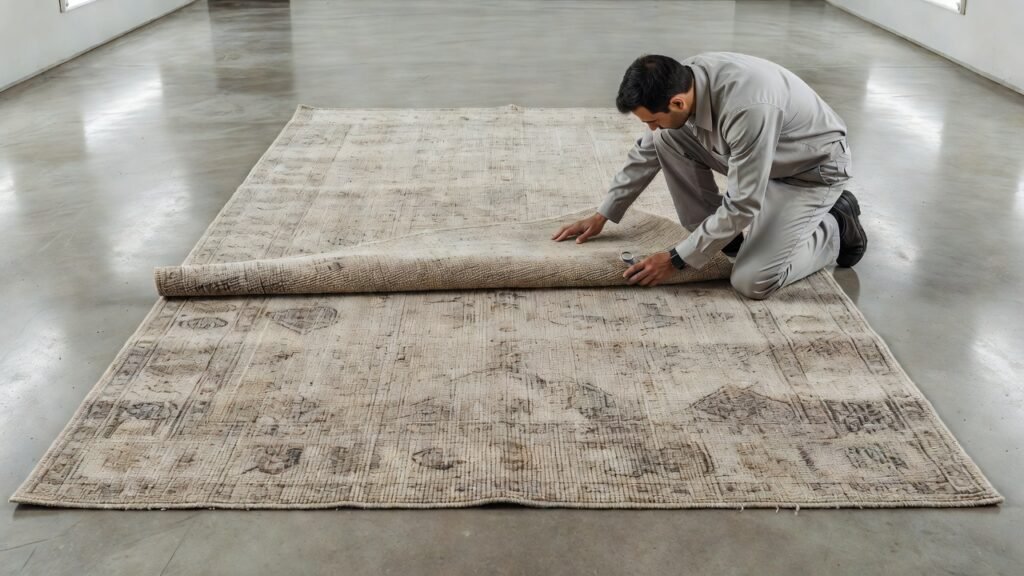
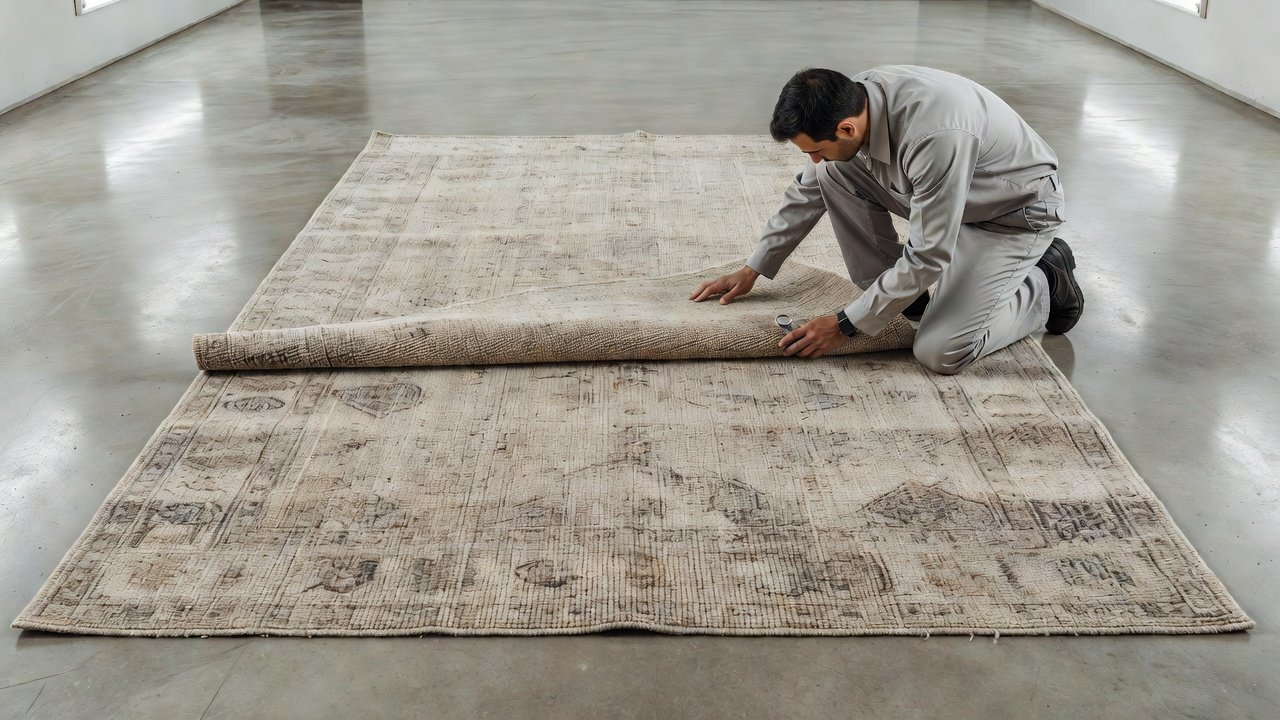
Before any water touches your rug, we do a dry inspection that takes anywhere from ten to thirty minutes depending on construction and condition. We’re testing dye stability, checking the foundation fibers for brittleness, looking at the back of the rug for previous repairs or reweaving, and assessing soil depth. A rug from a Jersey City condo with underfloor heating will behave differently in the wash than one from a cold-floor apartment in Journal Square.
This step matters because the wrong pre-treatment on an unstable dye can permanently bleed reds into whites, or lift fugitive indigo into adjacent cream fields. We’ve seen that happen to clients who used a general carpet cleaner before finding us. The damage is not reversible.
Common Problems We Diagnose and How We Fix Them
Problem 1: Compacted, Lifeless Pile
Symptoms: The rug looks dull, the pattern appears muted, and the surface feels stiff or flat underfoot. Traffic lanes are noticeably darker than the field.
Cause: Particulate soil dust, fine grit, and urban debris has settled deep into the pile base and is abrading the fibers from the inside. In New York-area apartments, this builds up faster than most owners expect. According to the EPA, indoor air can be two to five times more polluted than outdoor air, and rugs trap significant amounts of dust, allergens, and particulate matter a particular concern in dense urban environments like New York City.
Fix: Thorough dusting before washing is the step most DIY attempts skip entirely. We mechanically beat and vibrate the rug to dislodge dry soil from the foundation before any moisture is applied. After a full submersion wash and controlled drying, the pile typically recovers significant loft. The Tabriz from Hamilton Park looked like a different rug after dusting alone.
Can this be prevented? Consistent vacuuming both sides, every two weeks slows the accumulation significantly. A quality rug pad also reduces the grinding action that drives grit into the base.
Problem 2: Dye Migration and Color Bleeding
Symptoms: Pink or purple halos around red borders, blue bleeding into ivory fields, or an overall color muddiness that wasn’t there before a cleaning attempt.
Cause: Natural dyes particularly older chrome-dyed reds and natural indigos can be pH-sensitive or simply unstable when wet. This isn’t a flaw in a well-made rug; it’s a characteristic that requires specific handling. The problem becomes a crisis when someone uses a high-alkaline cleaner or over-wets the rug without proper pH control.
Fix: We run dye bleed tests on all four quadrants before washing. Where we identify fugitive dyes, we adjust our wash chemistry and water temperature accordingly, and we monitor continuously during the wash. Speed of drying also matters prolonged wetness allows colors to migrate. Improper DIY rug cleaning, including over-wetting and harsh detergents, is one of the leading causes of irreversible damage to wool, silk, and hand-knotted rugs, according to the Rug and Textile Appreciation Museum industry guidance.
Can this be prevented? Never blot a wet spill with anything alkaline. Plain cold water and a clean white cloth, then call us.
Problem 3: Pet Odor That Survives Surface Cleaning
Symptoms: The rug smells fine when dry but releases a sharp urine odor in humidity noticeable in New York summers, especially in buildings without central air.
Cause: Urine crystals bond to wool fibers and, when they penetrate to the foundation warps and wefts, become impossible to neutralize with topical sprays. The odor-causing compounds are not in the pile they’re in the structure of the rug itself. New York City has over 1.1 million registered dogs alone, and pet-related rug staining is consistently our top service request, which means we’ve developed a real process for this rather than a workaround.
Fix: Full submersion washing with an enzyme treatment sized to the contamination level, followed by a thorough rinse. We assess whether the rug foundation has been compromised heavy, repeated soiling can rot cotton wefts over time, and that’s a separate structural problem.
Can this be prevented? Act fast on any pet accident. The longer urine sits, the deeper it penetrates and the more fiber damage it causes.
Problem 4: Fringe Damage and Edge Unraveling
Symptoms: Fringe is yellowed, matted, or breaking off. Selvedge edges are fraying or the end knots are loosening.
Cause: Fringe on hand-knotted rugs is the actual warp foundation it’s not decorative trim sewn on afterward. Aggressive vacuuming with a beater bar, or a single wrong cleaning cycle, can snap these fibers. Edge unraveling usually means the overcasting has worn through.
Fix: We clean fringe separately using a gentler process and, where necessary, refer structural fringe or edge repair to our restoration team before cleaning begins. Cleaning a rug with active unraveling can accelerate the damage.
Can this be prevented? Vacuum parallel to the fringe, never across it. A rug pad that holds the edges flat also reduces the mechanical stress.
Problem 5: Dry Rot in the Foundation
Symptoms: The rug feels brittle when folded. You may see fine cracking along the back, or threads snapping when the rug is handled.
Cause: Prolonged moisture exposure from a leak, a spill left untreated, or storage in a damp basement — breaks down cotton or wool foundation fibers at the cellulose level. We find this more often in rugs that have been stored in Jersey City basement units or ground-floor apartments near the Hudson waterfront, where seasonal humidity is a real factor.
Fix: Cleaning can proceed carefully, but the rug needs structural assessment first. In some cases, washing an actively rotting foundation makes the damage worse. We’ll tell you honestly if restoration is the right path before cleaning, not after.
Can this be prevented? Never store a rug while damp. If a rug gets wet from a leak, get it dried professionally within 24 to 48 hours.
What Happens After the Wash
Controlled drying is not a minor detail. A hand-knotted rug dried too fast, or unevenly, can buckle, shrink, or develop mildew in the foundation while the pile still feels dry to the touch. We hang-dry in a climate-controlled space and do a final pile grooming before any rug leaves our facility. The IICRC recommends professional rug cleaning every 12 to 18 months for most households, and more frequently in high-traffic or pet-owning homes partly because consistent professional drying prevents the cumulative moisture damage that shortens a rug’s life.
For Jersey City clients who don’t have a car, we offer pickup and delivery across the Hudson. Getting your rug to a specialist in Brooklyn is easier than it sounds, and the difference between a rug that lasts another fifty years and one that deteriorates in the next five is usually this kind of professional attention.
If you have a rug that’s overdue for cleaning, or if something about its condition is worrying you, reach out to us at upperrugcleaning.com. We’re straightforward about what we find and what it costs.
Frequently Asked Questions
I’m in Jersey City — do you pick up and deliver, or do I have to bring the rug to Brooklyn?
We offer pickup and delivery throughout the greater New York area, including Jersey City and surrounding Hudson County neighborhoods. Most clients find scheduling a pickup far easier than transporting a large rug without a car. Contact us through upperrugcleaning.com to arrange a convenient time.
How do I know if my oriental rug has dye instability before I bring it in?
A simple field test: dampen a white cloth with cold water and press it firmly against a red or dark section of the pile for thirty seconds. If color transfers to the cloth, the dye is fugitive and needs specialist handling. This is exactly the kind of test we run before any wash, but knowing ahead of time helps you communicate the concern when you contact us.
What’s a realistic price range for oriental rug cleaning in 2026?
Professional hand-washing for an oriental rug in the New York City area typically runs between $4 and $8 per square foot depending on construction, soiling level, and any treatments required. A 9×12 rug will generally fall in the $430 to $865 range. Rugs requiring odor treatment, fringe work, or pre-wash stabilization carry additional costs that we communicate transparently before any work begins.
Related from Upper Rug Cleaning: Rug Cleaning City · How Upper Rug Cleaning Earns and Verifies Customer Reviews in Manhatta · Professional Rug Cleaning Services in Manhattan, NY