
Smart Rug Cleaning and Restoration Long Island City NY: 2026 Guide for Astoria Residents
Astoria has one of the densest concentrations of pre-war apartment buildings in Queens, and the rugs inside those units absorb everything steam heat dust, cooking smoke from Steinway Street restaurants drifting through cracked windows, and the grit that comes in off the N and W train platforms. That daily accumulation is why rug cleaning and restoration Long Island City NY is one of the most requested services we handle from clients just across the Queensboro Bridge. What too many Astoria residents don’t realize is how badly a rug can deteriorate or how badly a cleaning company can take advantage of you before you understand what professional care actually involves.
A few months ago, a client on 34th Avenue brought us a hand-knotted Turkish kilim her grandmother had carried over from Izmir. She’d called another company first. They quoted her a modest pickup fee over the phone, then sent an invoice for over $900 after the fact, citing vague “restoration surcharges.” She hadn’t authorized it, hadn’t been warned, and nearly lost the rug when she disputed the charge. That scenario a version of what made headlines back in 2015 when a doctor received a $42,000 bill for Persian rug cleaning still happens in New York City in 2026. The best defense is knowing exactly what should happen before, during, and after a professional cleaning.
Before You Start: What to Know About Your Rug
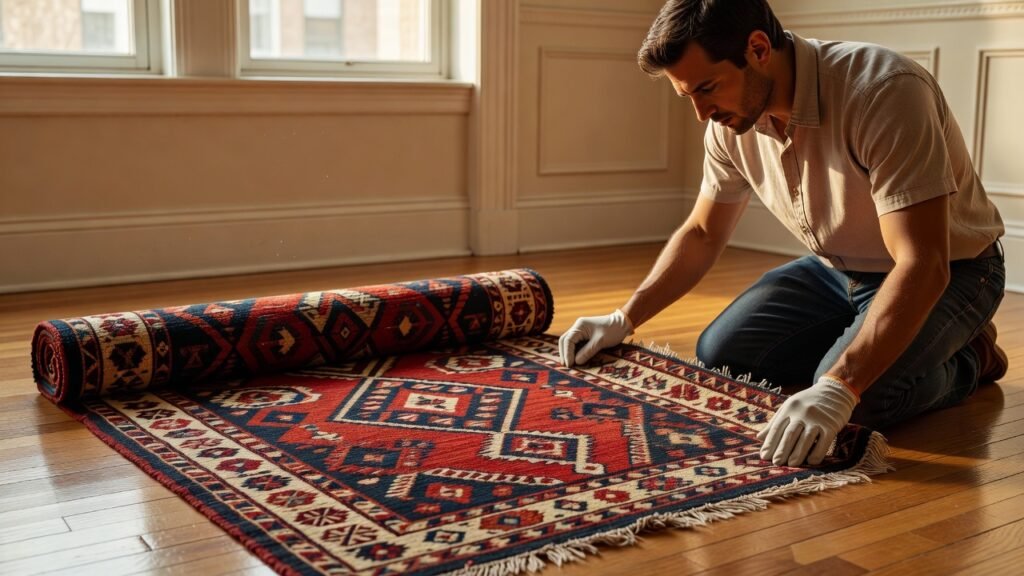
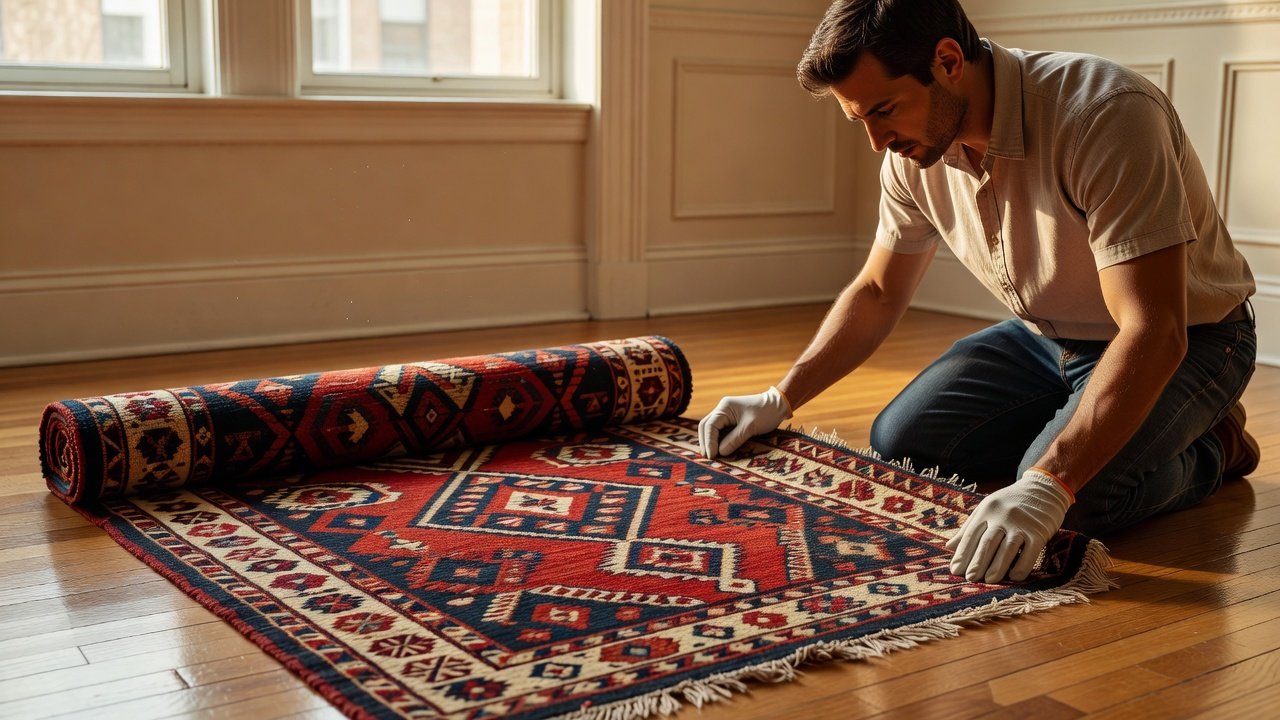
Before you hand your rug to anyone, spend ten minutes with it on the floor in daylight. Look at the back. Hand-knotted rugs — Persian, Turkish, Moroccan have visible knot rows on the reverse. Machine-made rugs have a uniform, almost plastic-looking backing. This distinction matters because the cleaning method, drying time, and cost should differ significantly between the two. A company that quotes the same flat rate for both is either inexperienced or not being straight with you.
Check for any existing damage: fraying at the edges, color bleeding where wet, foundation warping, or bare patches where pile has worn through. Document these with your phone camera before you release the rug to anyone. If something was already damaged before cleaning began, you need proof.
Also note your rug’s approximate size in square feet. In Astoria apartments many of which run 600 to 900 square feet — a living room rug is often a 8×10 or 9×12. Legitimate cleaners price by the square foot, with hand-knotted and wool rugs typically running higher than synthetic flatweaves. Get that number in writing before anything moves.
Step 1: Identify What Kind of Cleaning Your Rug Actually Needs
Not every rug needs the same treatment. A lightly soiled wool area rug that’s been down for a year in a no-pet household needs a thorough wash and controlled drying. A silk rug with urine damage from a dog needs fiber-safe enzyme treatment, color stabilization, and a longer restoration process. The IICRC recommends professional rug cleaning every 12 to 18 months for most households, and more frequently in homes with pets — and the reasoning is that waiting longer means set-in soils bond with fiber in ways that require more aggressive and expensive intervention later.
Ask the company what specific method they use for your rug type: full immersion wash, dry compound, or controlled low-moisture. A reputable shop near Long Island City or serving Astoria will explain the process without hesitation. If they’re vague, that’s a signal.
Step 2: Get a Written Estimate Before the Rug Leaves Your Home
This is the step that protects you from the $42,000 carpet cleaning situation. Any company doing pickup service which is standard in Astoria given that most residents don’t own cars should provide a written, itemized estimate that locks in the scope of work. That means: price per square foot, specific services included, any optional restoration services and their costs listed separately, and a clear authorization requirement before any add-on work begins.
If a company refuses to provide this or says they “can’t know the price until they inspect it at the facility,” that’s not unreasonable but they must commit to calling you with a firm number before proceeding. Get that agreement in writing or via text confirmation. Never accept a verbal-only quote for a rug worth more than a few hundred dollars.
Step 3: Understand the Restoration Services Being Offered
Restoration is a real service and sometimes a necessary one. Fringe repair, reweaving damaged foundation threads, re-dyeing bled sections, blocking a warped rug flat these are legitimate, skilled interventions that can add years of life to a valuable piece. The global oriental rug market was valued at over $5 billion in 2023, reflecting how seriously collectors and homeowners take these investments.
But restoration is also where bad-faith companies pad invoices. Know what you’ve authorized. If your rug needs fringe repair, that should be a quoted line item you approve separately from the base cleaning. We see this constantly in our facility rugs that arrive with minor fringe wear and come with a client’s confused question: “Did I agree to have the whole border re-tufted?”
Step 4: Confirm the Drying and Return Process
This is underrated and genuinely important for your rug’s health. According to the EPA, indoor air can be 2 to 5 times more polluted than outdoor air, and a rug returned damp will start accumulating mold and mildew within 24 to 48 hours a serious problem in the humid Astoria summers when apartments hold moisture. A professional facility uses controlled drying rooms, not open-air hanging in a parking lot.
Ask: How long does drying take? How is the rug stored while it dries? Is it rolled or flat? Hand-knotted wool rugs should dry flat, face down, for even pile recovery. Confirm a specific return date and ask about storage fees if pickup is delayed.
Step 5: Inspect the Rug Before You Sign Off
When the rug comes back, unroll it fully and inspect it in daylight before the driver leaves or before you sign any completion form. Run your hand across the pile in both directions. Check the fringe. Look at the back. Compare the condition to you before photos. If you see new damage color bleeding, pile distortion, fiber loss notes it immediately and document it on the spot. Waiting until the company has left complicates any dispute significantly.
We’ve had clients in Woodside, Jackson Heights, and along the Ditmars corridor come to us specifically because a previous cleaner returned a rug and left before the client had a chance to check it. Don’t let that happen.
Step 6: Ask About Long-Term Care Between Cleanings
A rug that’s been professionally cleaned is a good candidate for a rug pad, which prevents slipping on hardwood floors common in Astoria’s pre-war buildings and reduces wear on the foundation fibers. Rotate your rug every six months if it sits in a high-light area UV fading is real, even though NYC apartment windows. Vacuum regularly but avoid the beater bar setting on wool and silk rugs.
A 2023 study by the American College of Allergy, Asthma and Immunology found that rugs can harbor up to 100,000 dust mite allergens per gram of material. Regular maintenance between professional cleanings matters — not just for the rug, but for the air quality in your home.
Rug Cleaning and Restoration Long Island City NY: How We Serve Astoria
Our team picks up and delivers throughout Astoria, Sunnyside, Long Island City, and surrounding Queens neighborhoods. We provide written estimates before any work begins, we call for authorization on any restoration service beyond the agreed scope, and we return rugs fully dry. If your rug has been sitting on a pre-war parquet floor since before the pandemic and it’s due or overdue for a proper cleaning, reach out to us at upperrugcleaning.com. We’re straightforward about pricing and honest about what your rug actually needs.
Troubleshooting: What to Do If You Already Have a Disputed Invoice
If you’re holding an invoice for rug cleaning services you didn’t authorize, don’t pay it under pressure and don’t return the rug until the dispute is resolved in writing. In New York State, consumers are protected under General Business Law Section 349 against deceptive trade practices. Document every communication. If the company is unresponsive or threatening, file a complaint with the NYC Department of Consumer and Worker Protection at nyc.gov/dcwp. You have real recourse use it.
Frequently Asked Questions
How much does rug cleaning and restoration in Long Island City NY typically cost for an Astoria apartment rug?
For a standard 8×10 wool area rug, professional cleaning in this area typically runs between $150 and $280 depending on soil level and fiber type. Hand-knotted or silk rugs with restoration needs fringe repair, reweaving, color correction will cost more, and any legitimate company will give you a line-item quote before touching the rug. Be skeptical of any company that won’t commit to pricing before pickup.
Is it safe to clean an antique or heirloom rug at a facility rather than having someone clean it in my Astoria apartment?
Facility cleaning is almost always safer for valuable rugs than in-home cleaning. A proper wash requires full immersion, controlled water temperature, fiber-safe solutions, and a regulated drying environment none of which are possible in a typical Astoria apartment. The risk of over-wetting, improper drying, and mold growth is significantly higher with in-home portable machines.
What counts as “restoration” versus standard cleaning, and why does it matter for my bill?
Standard cleaning covers washing, rinsing, and drying the rug. Restoration is any repair work: fringe reattachment, pile reweaving, color stabilization after bleeding, blocking for shape, or mothproofing treatment. These are separate services with separate costs. They should be quoted and approved by you before any work begins never bundled silently into the final invoice. If a company adds restoration services without prior authorization, that is a billing dispute you are entitled to challenge.
Related from Upper Rug Cleaning: How Upper Rug Cleaning Earns and Verifies Customer Reviews in Manhatta · Professional Rug Cleaning Services in Manhattan, NY · Rug Cleaning City